

January 2026 is likely to bring more frequent showers and slightly higher temperatures than usual, especially over northern and eastern Trinidad and central Tobago, according to the Trinidad and Tobago Meteorological Service (TTMS).
Although the Dry Season has been declared, it is never totally without rainfall. However, rainfall accumulations are markedly lower than during the Wet Season.
Rainfall Outlook for January-March 2026
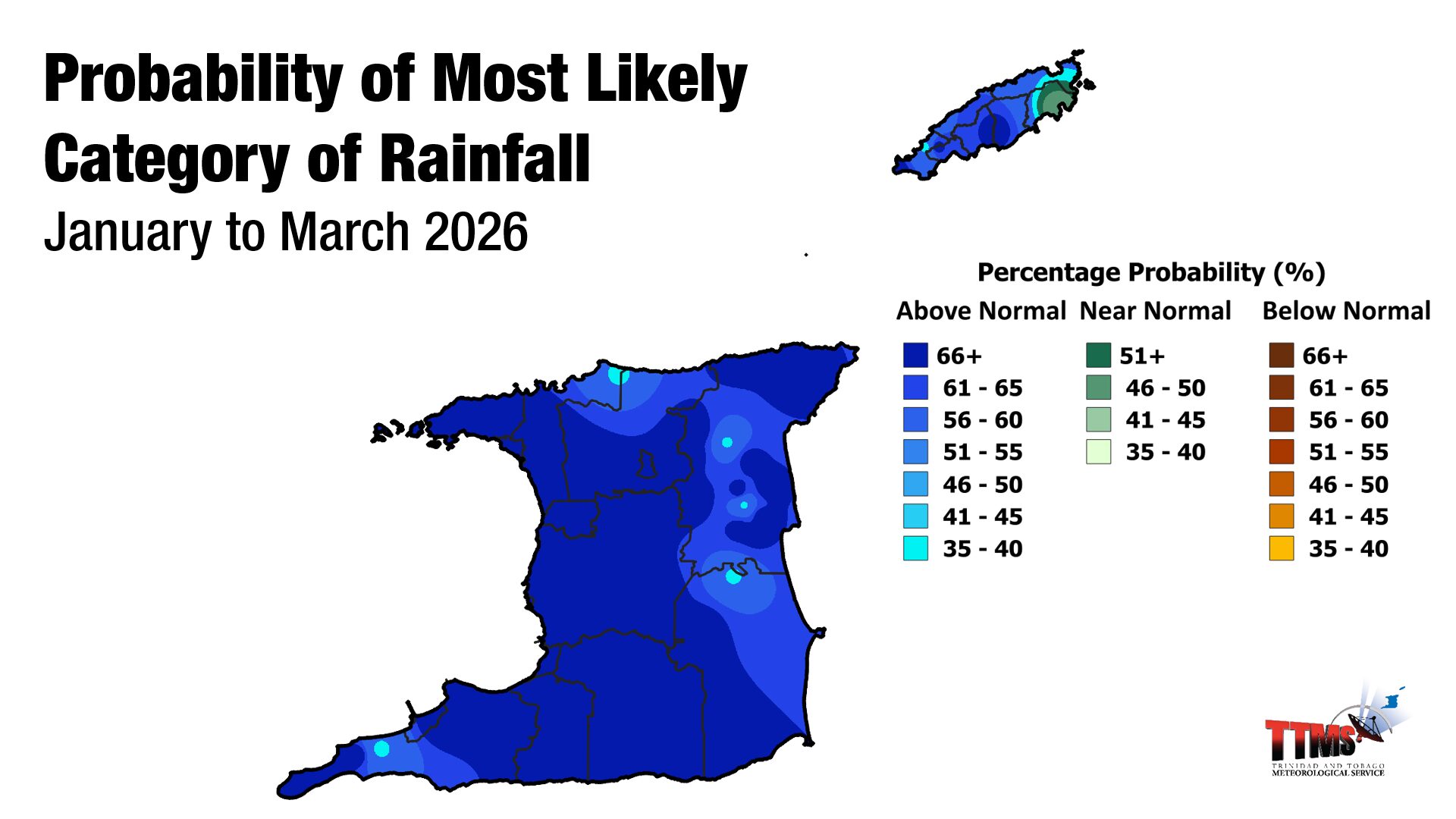
According to the TTMS, the January–March (JFM) 2026 period has a moderate to high probability (around 56–76%) of above-normal rainfall over most of Trinidad and Tobago, with much of that excess falling in January and early March.
Northern and eastern Trinidad (e.g., Valencia, North Oropouche, Sangre Grande) and central Tobago (e.g., Roxborough, Glamorgan) are favoured for the highest accumulated totals, according to the TTMS’ outlook.
Above-normal rainfall for JFM is defined as totals at or above 125% of the 1991–2020 long-term average.
What’s causing increased January rainfall?
A weak La Niña, which developed in October 2025, is expected to enhance rainfall during the first half of the Dry Season, including January. In addition, above-average sea surface temperatures east and southeast of Trinidad and Tobago are providing additional moisture, supporting cloudiness and rainfall.
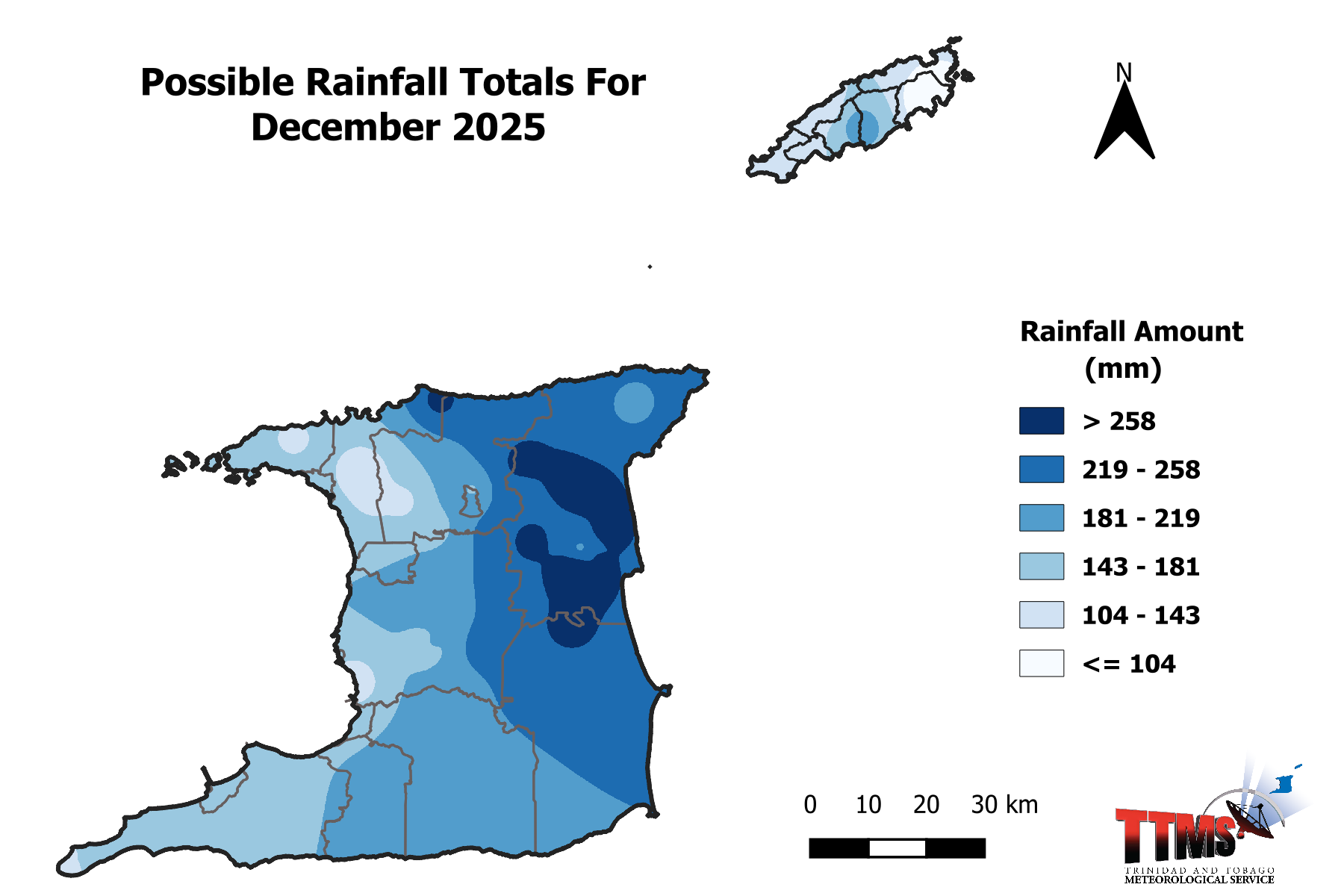
From December 16th to 30th, the TTMS observed below-normal rainfall across Trinidad, with a 15-day rainfall total of 23.8 mm at Piarco, due to wet days (days with more than 10 millimeters of rain) on the 17th, 28th, 24th, and 29th. Tobago observed above-normal rainfall, with a 15-day rainfall total of 66.7 mm, and wet days on the 17th, 26th, 28th, and 29th.
Following December, additional short-duration heavy showers could still trigger flash flooding, waterlogged soils, and ponding in flood-prone and low-lying areas.
Temperature Outlook for January-May 2026

According to the TTMS, the mean, maximum, and minimum temperatures for the Dry Season, including January, are likely to be above normal across both islands. Urban and built-up areas have the greatest odds of warmer-than-average days and nights.
However, despite the warm bias, at least three to seven “cool nights” with temperatures below 20°C in Trinidad and 22°C in Tobago are still possible in January and February.
Historically, cool temperatures across Trinidad result from several factors occurring:
- Low amounts of low-level moisture (water vapor/relative humidity).
- Calm/near-calm winds;
- Little to no cloud coverage;
- Winds originating from the northeast to the north at the lower levels of the atmosphere;