


The Trinidad and Tobago Meteorological Service (TTMS) has declared the start of the 2026 Wet Season on May 5th, 2026, following the passage of a tropical wave today.
The TTMS declares the start of the local Wet Season following measurable rainfall (≥0.1 mm) associated with a tropical wave or the Intertropical Convergence Zone, both of which are primary drivers for rainfall in Trinidad and Tobago.
According to the Trinidad and Tobago Meteorological Service, the Wet Season is characterized by “a modified moist equatorial climate characterized by low wind speeds, hot, humid days and nights, and a marked increase in rainfall which results mostly from migrating and latitudinal shifting equatorial weather systems from June to December. Late May and December are considered transitional periods to the wet and dry seasons, respectively.”
Rainfall on May 5th was associated with the first Tropical Wave of 2026, which moved off the western African coast on April 30th, 2026. According to the TTMS, “this wave, classed as a weak tropical wave, produced minimal but measurable rainfall across some parts of the country, including at Piarco, where we measured 2.1 mm and 2.5 mm at Charlotteville.”
May is a transition month, and according to the TTMS, rainfall episodes will likely be interspersed with dry spells and Saharan Dust events, the latter of which is currently creating a relatively dry environment behind the wave axis. Over the next couple of days, there will be relatively dry conditions and a moderate concentration of Saharan Dust.
Historical Wet Season Start Date
Declarations by the Trinidad and Tobago Meteorological Service
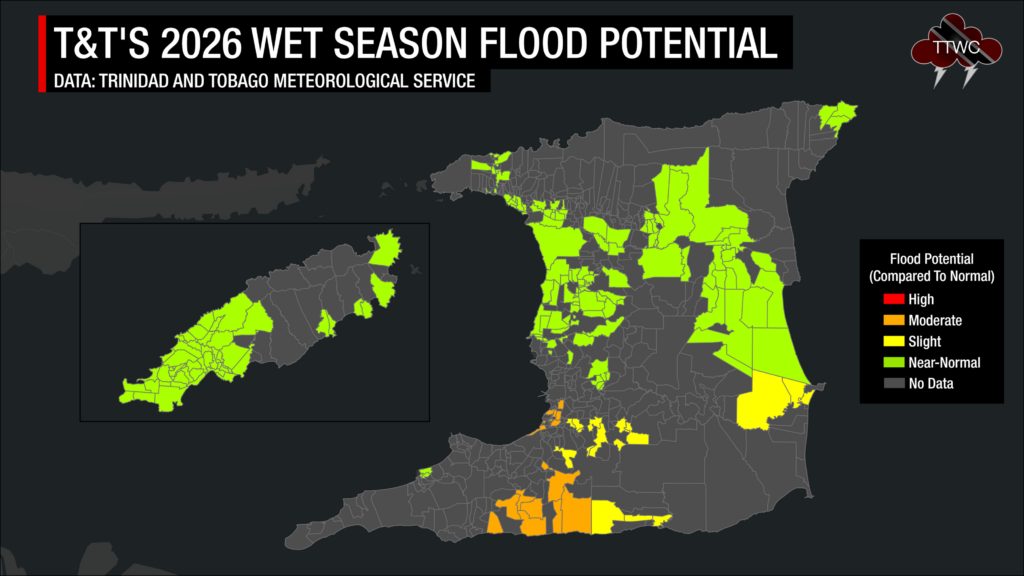
While 2026 was one of the earlier starts of the Wet Season in the past 16 years, it bears little indication of how wet the Wet Season will be. The TTMS rainfall outlook through May, June, and July is for near-normal rainfall in Trinidad and below-normal in Tobago.
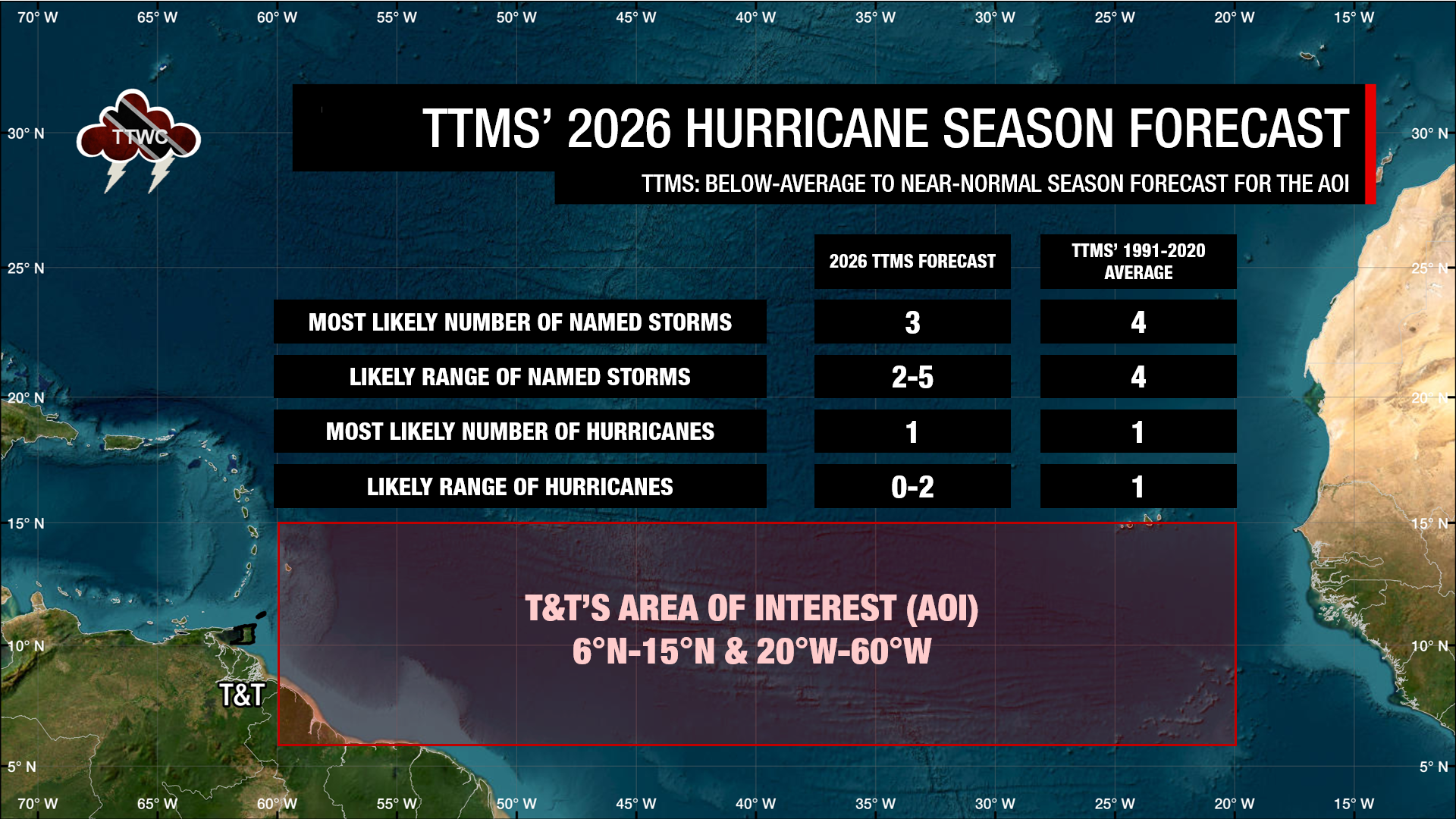
The upcoming Hurricane Season (June–November) is expected to be influenced by the El Niño Southern Oscillation (ENSO), which may reach moderate-to-strong intensity by the season’s peak. Historically, a well-developed El Niño suppresses Atlantic hurricane activity.