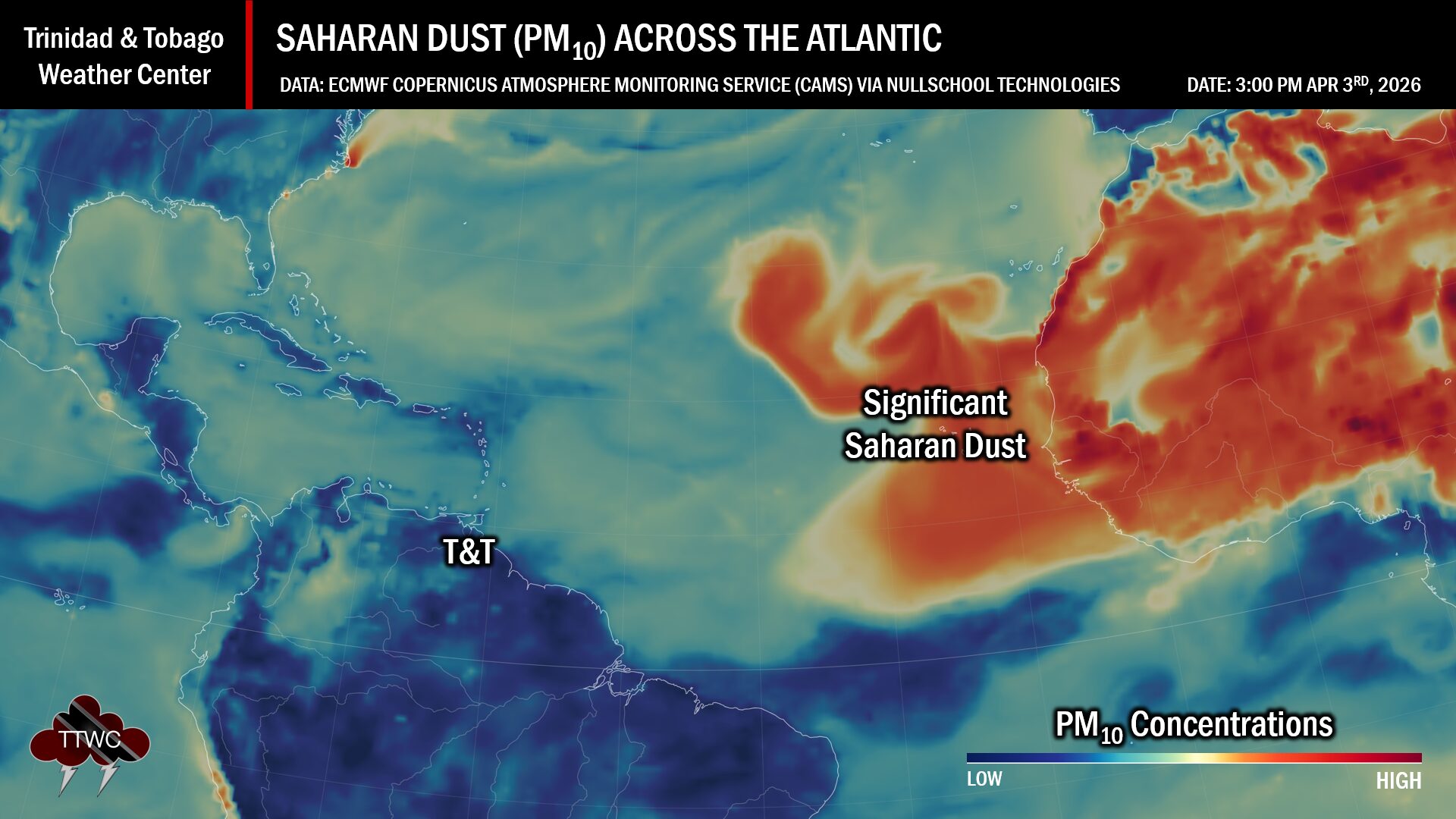


Following a short-lived surge of Saharan Dust on Monday, Trinidad and Tobago is forecast to experience mostly dust-free days for the end of the year into 2026.
What you need to know
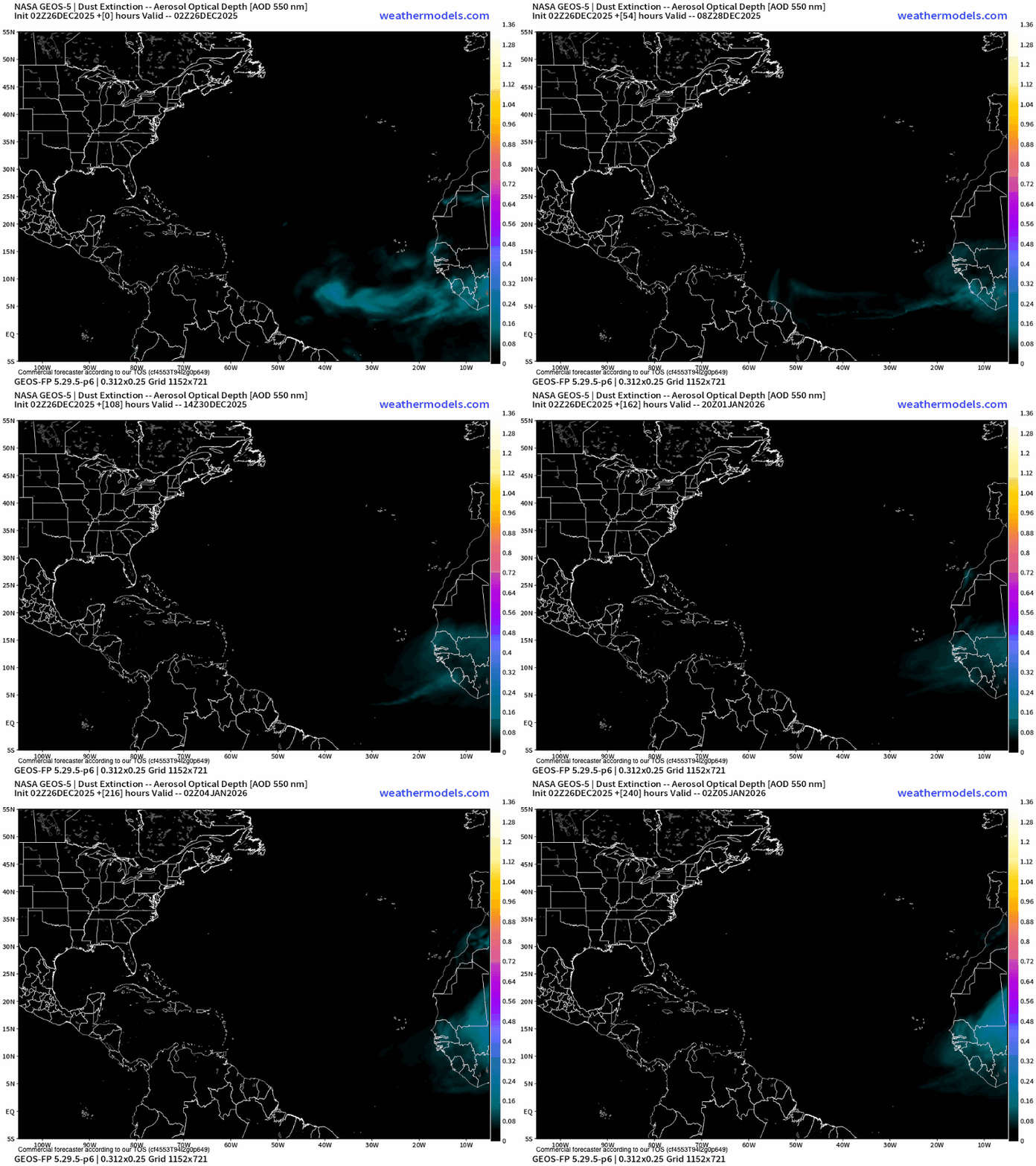
— Saharan Dust Surges: A mild to moderate level of Saharan Dust is forecast to affect T&T and the Windward Islands from overnight Sunday through early Tuesday morning (December 28th-30th), peaking on Monday. No other dust surges are forecast over the next 10 days.
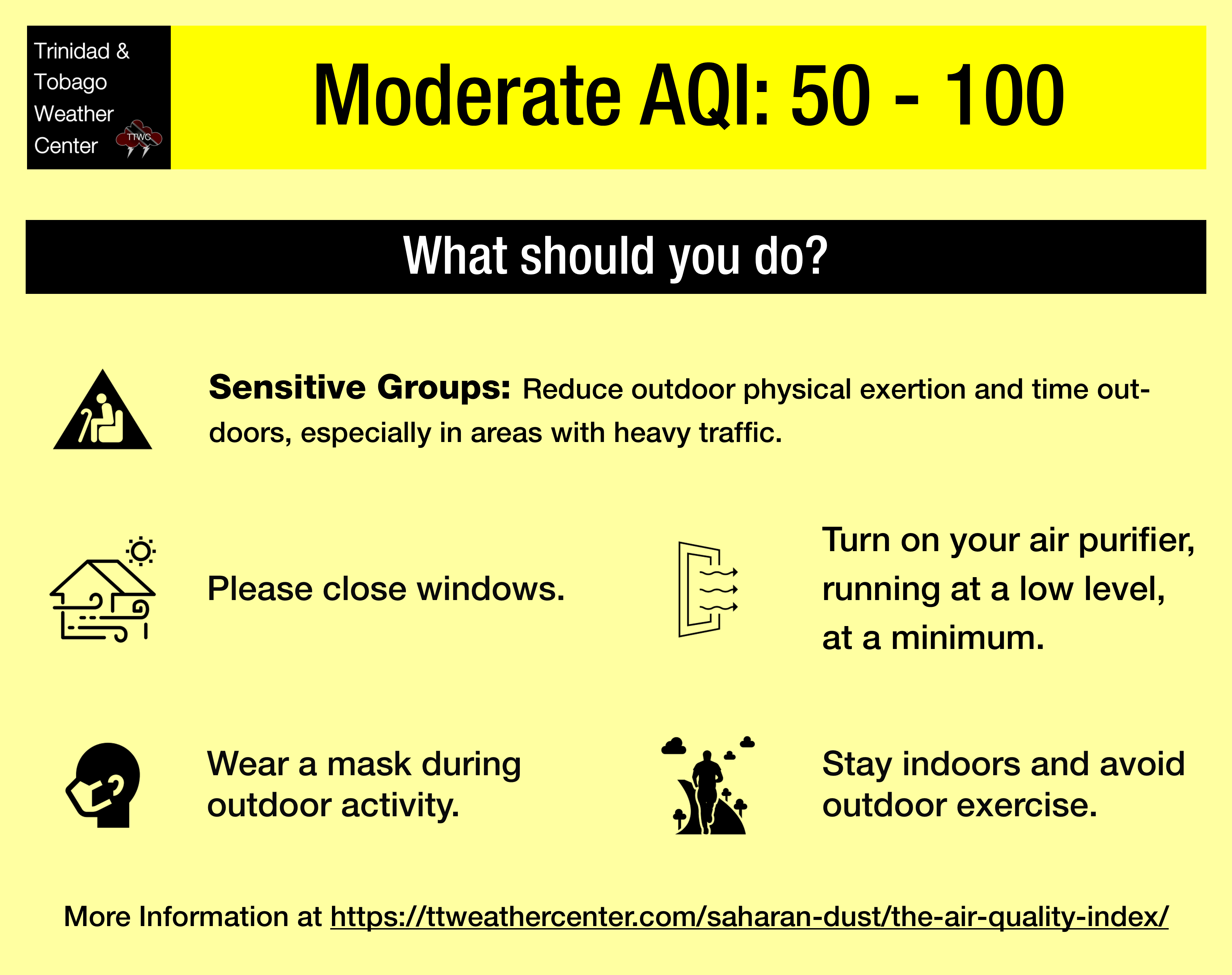
— What Should You Do: Unusually sensitive groups are advised to take necessary precautions on Monday, while the general public remains mostly unaffected over the next seven to 10 days from Saharan Dust.
Current AQI Levels Across T&T
As of 2:00 AM Saturday, December 27th, 2025, all official air quality monitoring stations from the Environmental Management Agency (EMA) are not reporting PM2.5 (particulates smaller than 2.5 micrometers in size, typically associated with increases in Saharan Dust, vehicle exhaust, and smoke) and PM10 particulate data.
However, unofficial air quality monitoring stations at Longdenville and Woodbrook report good air quality levels.
Outside of rainfall, visibility, used as a proxy for Saharan Dust concentrations, at the A.N.R. Robinson International Airport at Crown Point, Tobago, and at Piarco, remains at 10 kilometers over the last 24 hours.
Saharan Dust Forecast For T&T
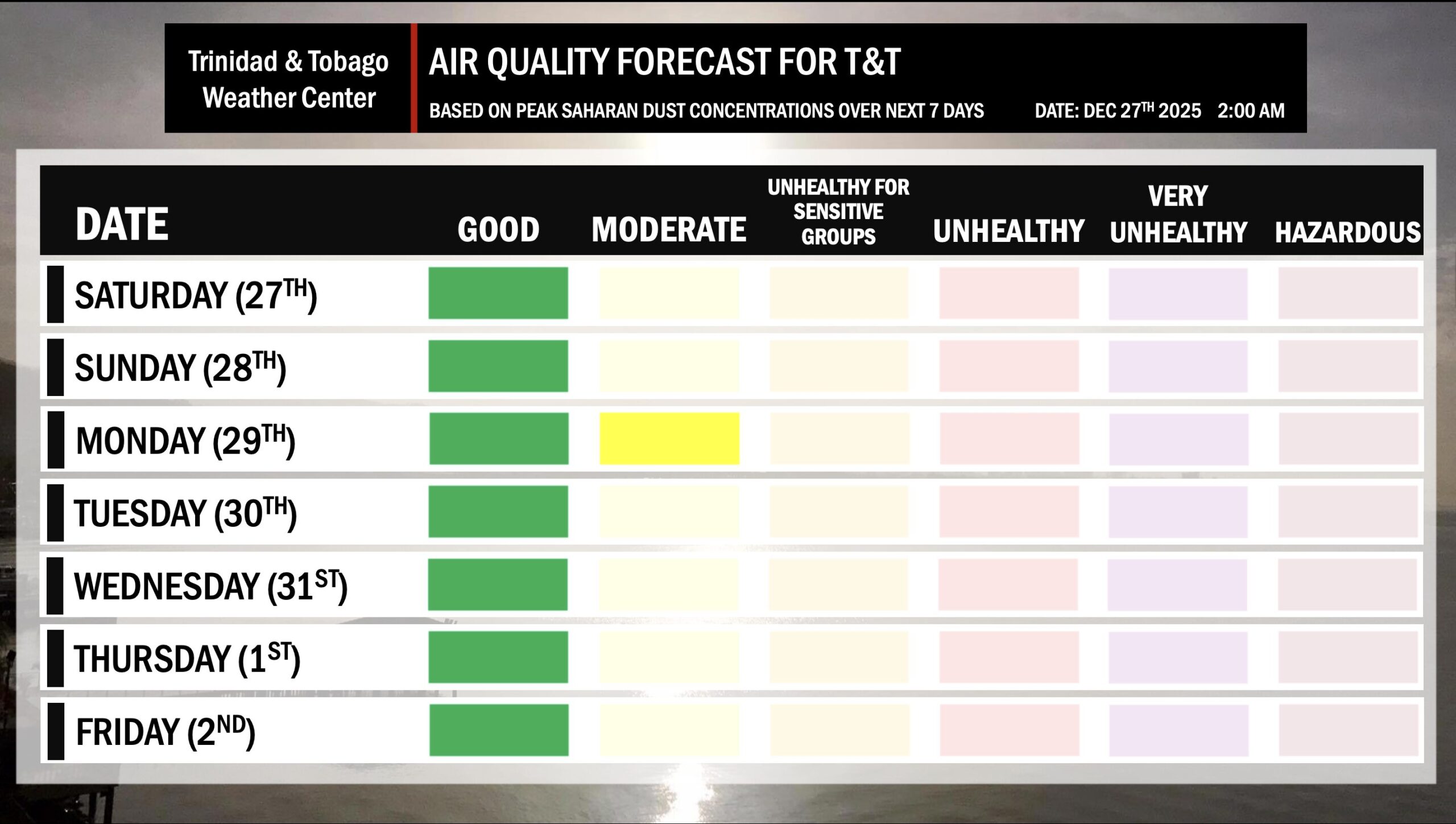
December 27th through 28th: Little to no Saharan Dust forecast with air quality at good levels. Horizontal visibility is generally unaffected by dust.
Overnight December 28th through early December 30th: Mild to moderate concentrations of Saharan Dust with air quality levels generally at good to occasionally moderate levels. Higher dust concentrations are forecast across northern Trinidad and Tobago. Horizontal visibility is generally unaffected by dust.
December 30th through January 5th: Little to no Saharan Dust forecast with air quality at good levels. Horizontal visibility is generally unaffected by dust.
What does this mean for you?
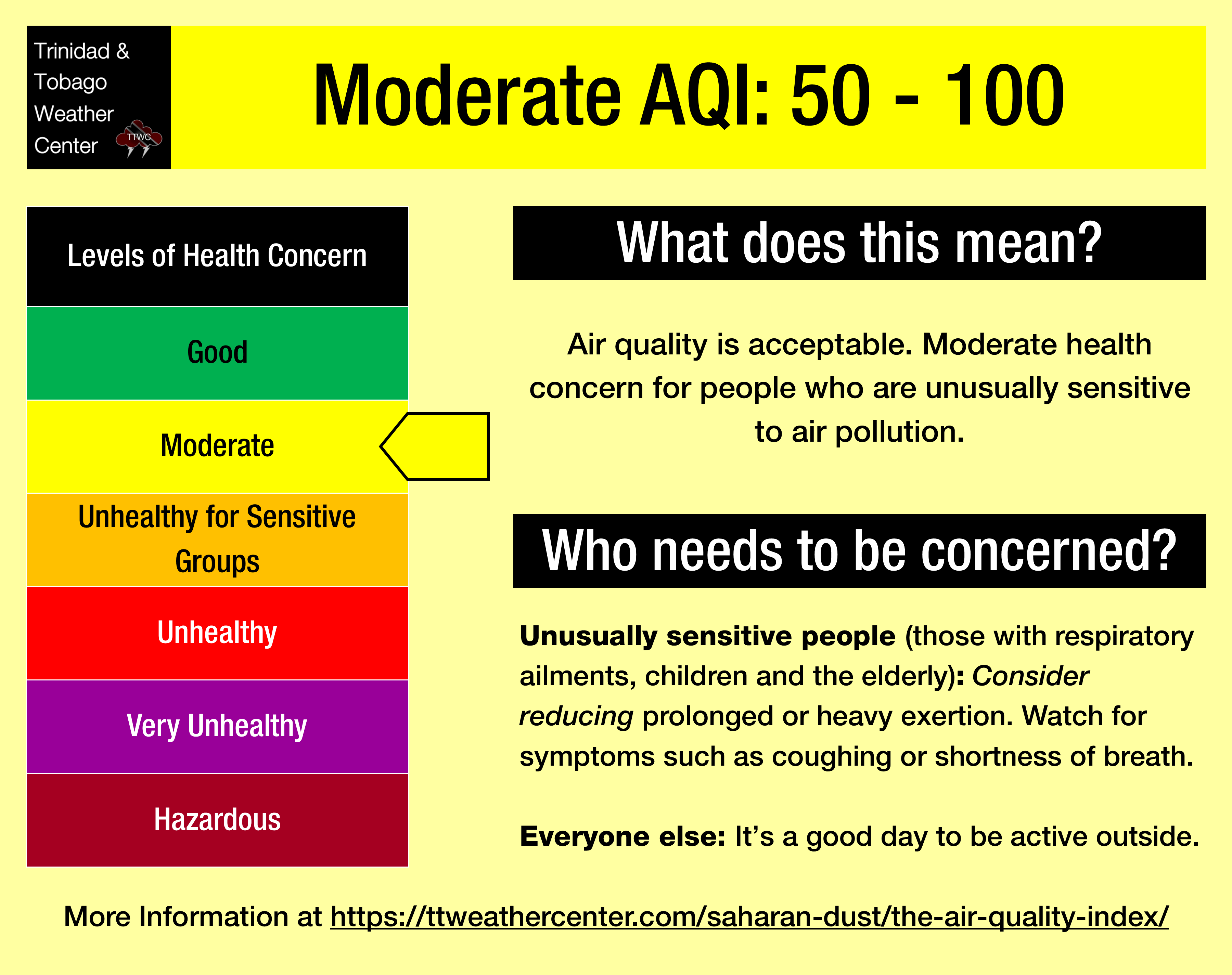
Generally, over the next 10 days, air quality levels are forecast to be mainly good with a brief period of moderate air quality possible on Monday, December 29th, 2025. With possible firework activity on Wednesday, December 31st, 2025, into January 1st, 2026, air quality may be briefly affected, particularly in valleys. However, low-level wind speeds are forecast to be elevated, quickly pushing any firework-related air pollution westward.
We’ve entered a period in which a ridge of high pressure remains over the central Sahara Desert, while the Intertropical Convergence Zone (ITCZ) remains over the Gulf of Guinea, extending southwestward to Brazil. The Harmattan wind (see below) accelerates when it blows across the mountain massifs of Northwest Africa. If its speed is high enough and it blows over dust source regions, it lifts the dust and disperses it.
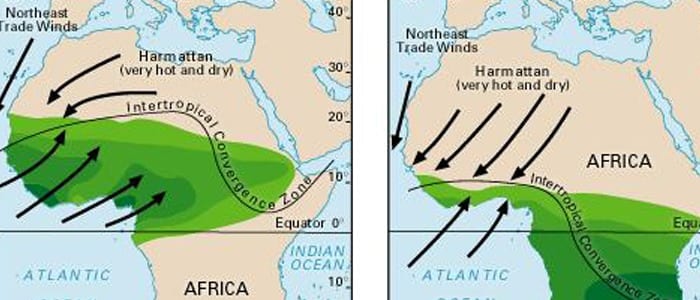
The surges of dust during this time of year are due to the Harmattan, a season in the West African subcontinent that occurs between the end of November and the middle of March. During this season, a predominant northeasterly trade wind (dubbed the Harmattan Winds) blows from the Sahara Desert over Western Africa into the Gulf of Guinea.
Dust that makes it into the upper levels of the atmosphere can then get transported across the Atlantic Ocean and affect the Eastern Caribbean. These Saharan Dust outbreaks tend to be milder in the Eastern Caribbean than the dust outbreaks.
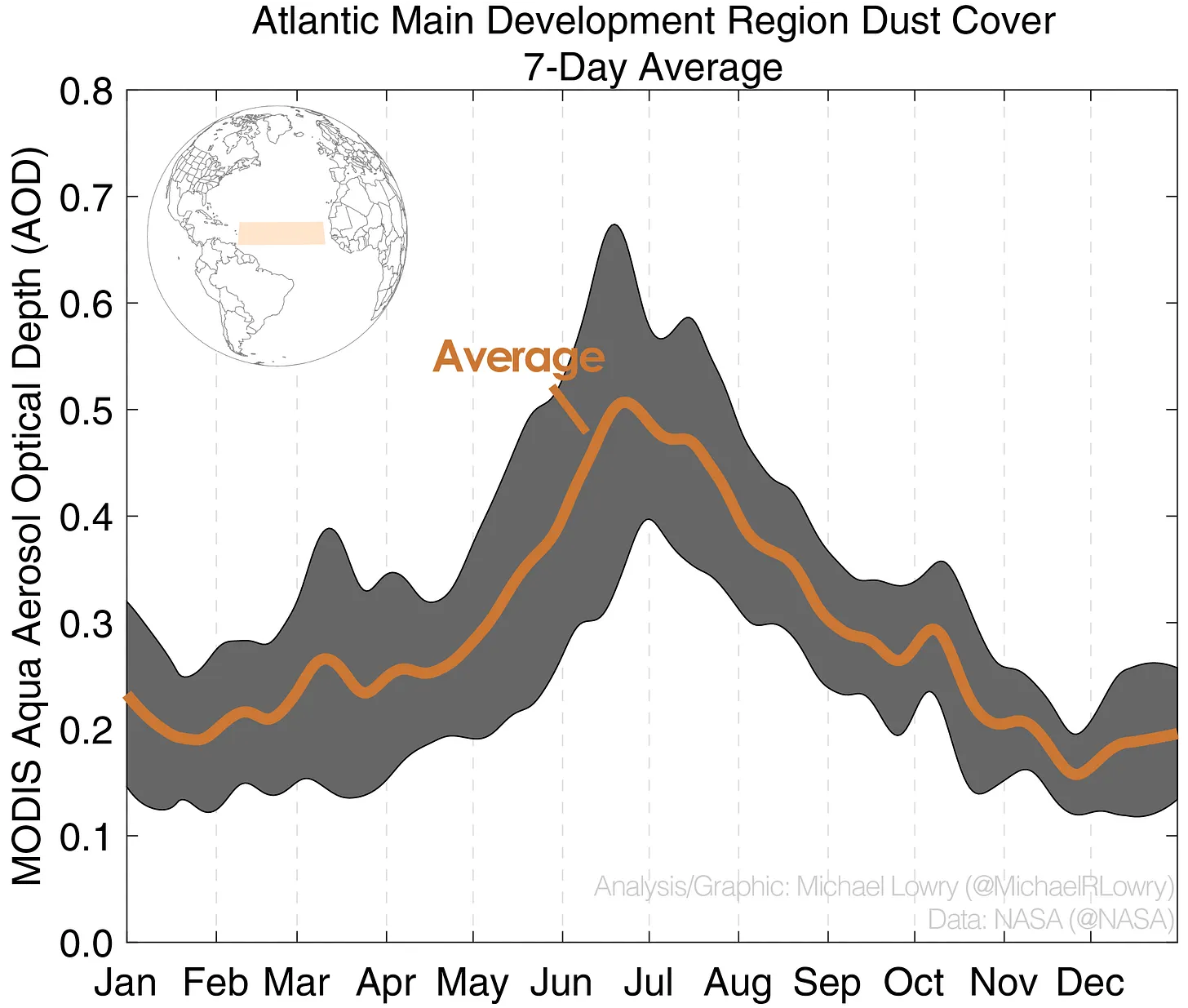
Larger, more concentrated plumes of Saharan dust begin in April and continue through November.