

What you need to know
— What: Long-period swells up to 15 seconds, producing large, breaking waves, have decreased to periods between 8 and 13 seconds, continuing through November 19th. In addition, spring tides through November 24th will enhance wave heights during high tide. Lastly, elevated winds in heavy showers/thunderstorms are likely to lead to locally choppy/rough seas.
— Where: Impactful swells predominantly impacted T&T’s northern and eastern coastlines.
— When: Swell periods up to 13 seconds are forecast to continue through Wednesday. Another swell event is forecast from mid-Monday into Tuesday with peak swells up to 15 seconds.
— Impacts: Though the alert has been discontinued, agitated seas with exacerbated conditions at high tides, larger-than-normal breakers with large, battering waves in the surf zone; disruption of near-shore activities, including fishing, swimming, and boat moorings; coastal flooding with intrusion of salt water, and displacement of sand, further than the average reach point, and elevated risk of rip currents, particularly along northern and eastern beaches.
— What Should You Do: Although the alert was discontinued, all marine interests need to exercise extreme caution. Inexperienced mariners should avoid navigating in hazardous conditions, especially those operating smaller vessels. If you intend to go into the water, it is recommended that you use beaches with on-duty lifeguards.
Latest Alerts

Localized Flood Alert Discontinued For Trinidad
Trinidad and Tobago is NOT under any tropical storm or hurricane threat, watch, or warning at this time.
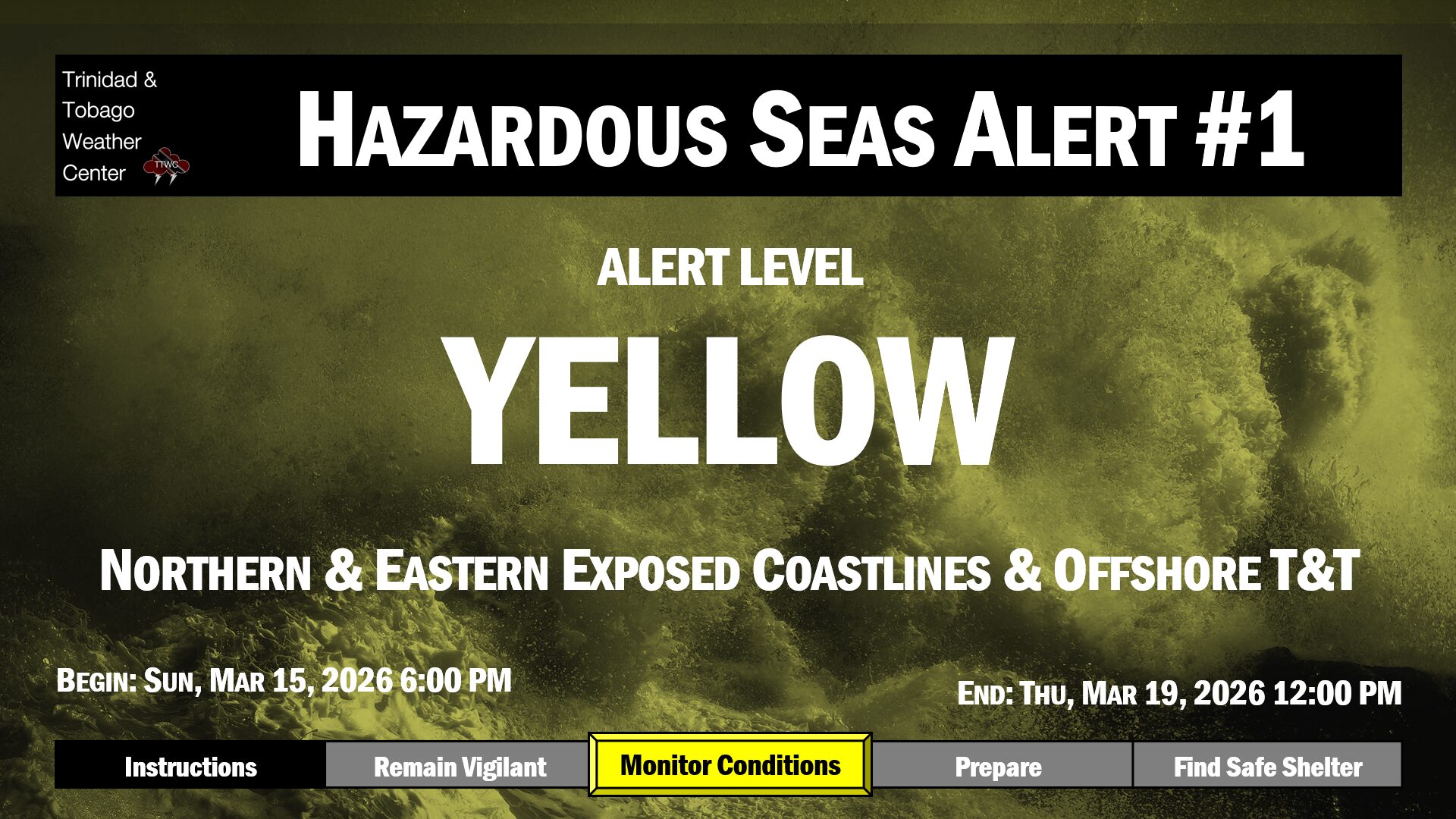
The Hazardous Seas Alert
The Trinidad and Tobago Meteorological Service has discontinued the Hazardous Seas Alert for northern and eastern nearshore areas of Trinidad and Tobago at 10:57 AM Tuesday, November 18th, 2025. Forecast models indicate long-period swells are forecast to continue through Wednesday night.
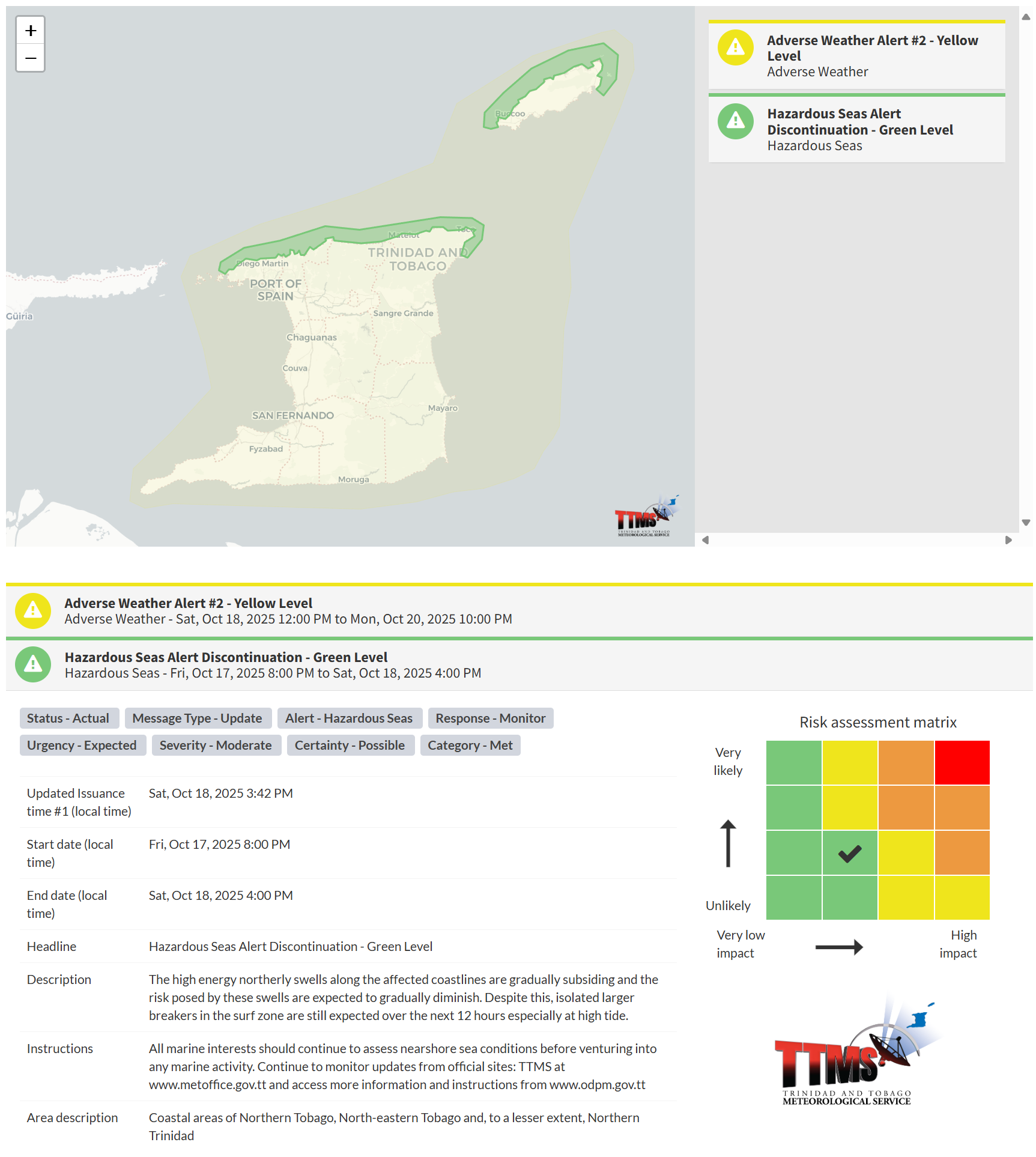
“The significant effects from northerly long-period swells are quickly diminishing; however, some limited residual tidal effects would remain and eventually cease,” according to the Trinidad and Tobago Meteorological Service.
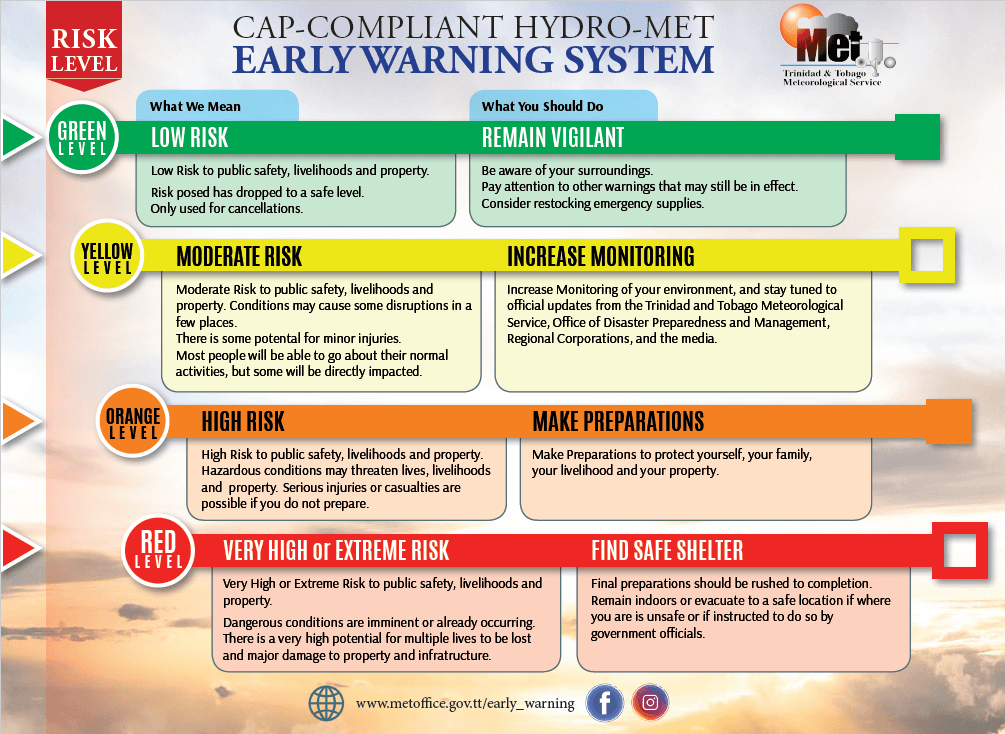
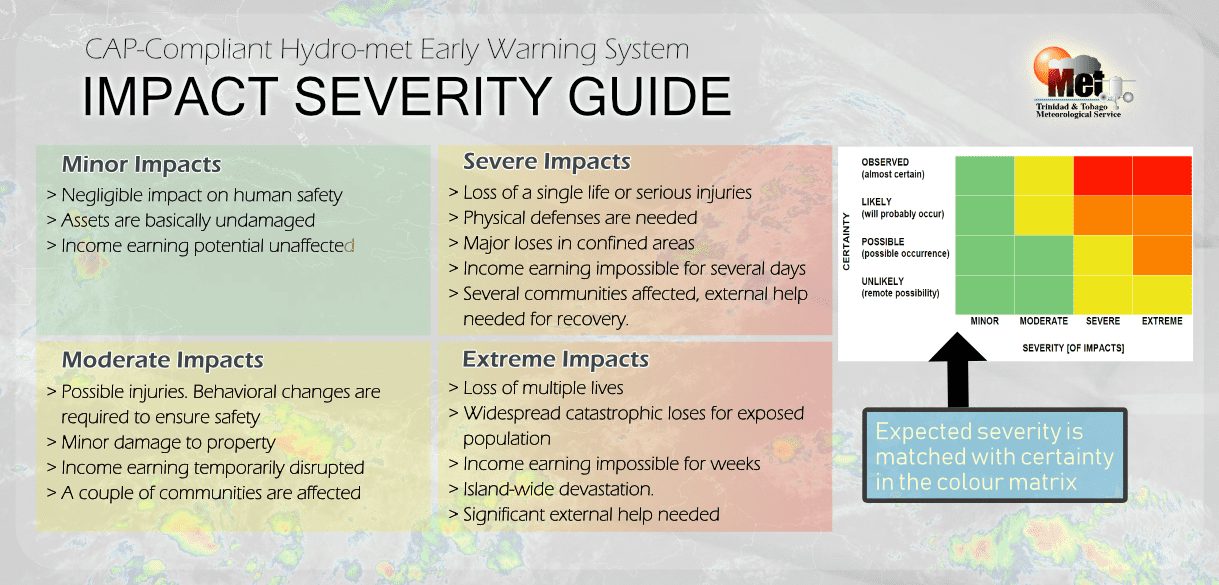
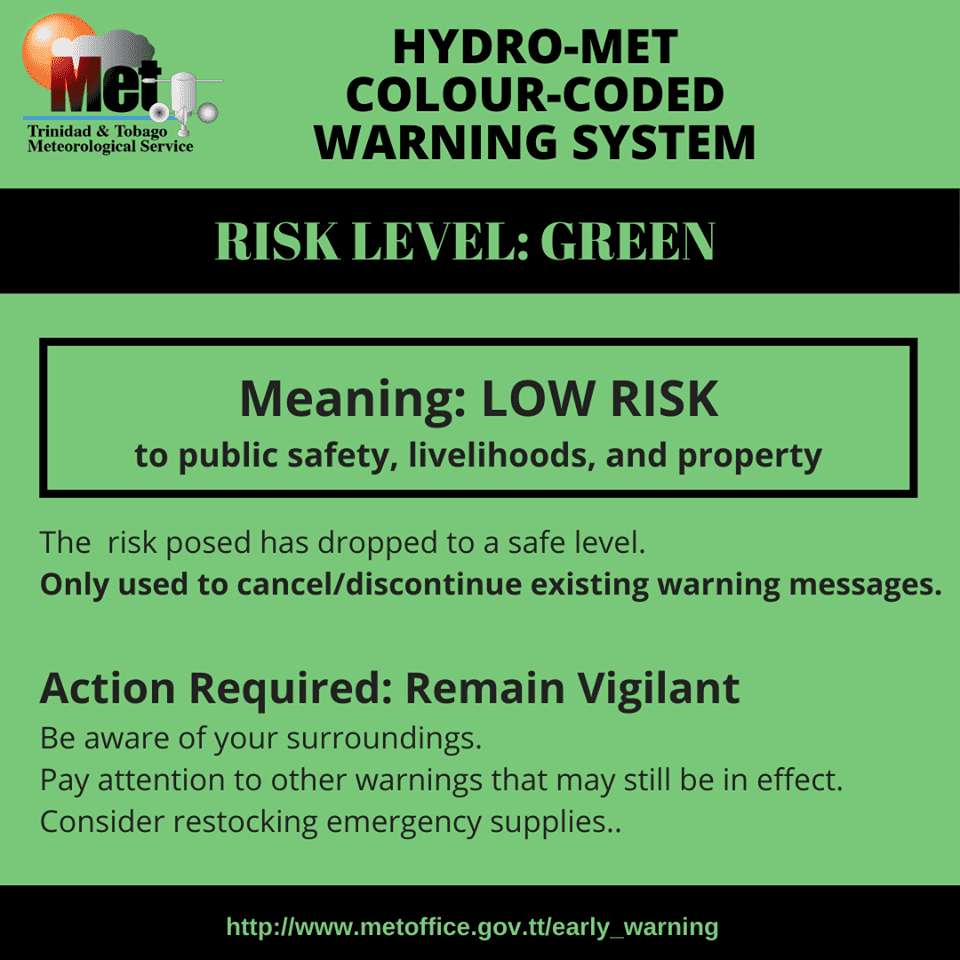
The alert’s color indicates the event’s severity and the likelihood of its occurrence. Currently, the alert level is green. Although the alert has been discontinued, based on the risk matrix, the hazards remain likely and the impacts are minor.
There is an increased risk of strong rip currents, which pose a serious hazard to swimmers and beachgoers. Rip currents can be life-threatening even for experienced swimmers. Agitated seas will likely be particularly dangerous for offshore activities, including fishing and other small craft marine interests.
The Met Office advises that all marine interests should continue to assess nearshore sea conditions before venturing into any marine activity.