

As Tropical Storm Jerry continues to approach the Leeward Islands, with stronger winds and heavier rains affecting the northern Windwards and Leewards, it is forecast to agitate seas across the Lesser Antilles as swells propagate outward from the system.
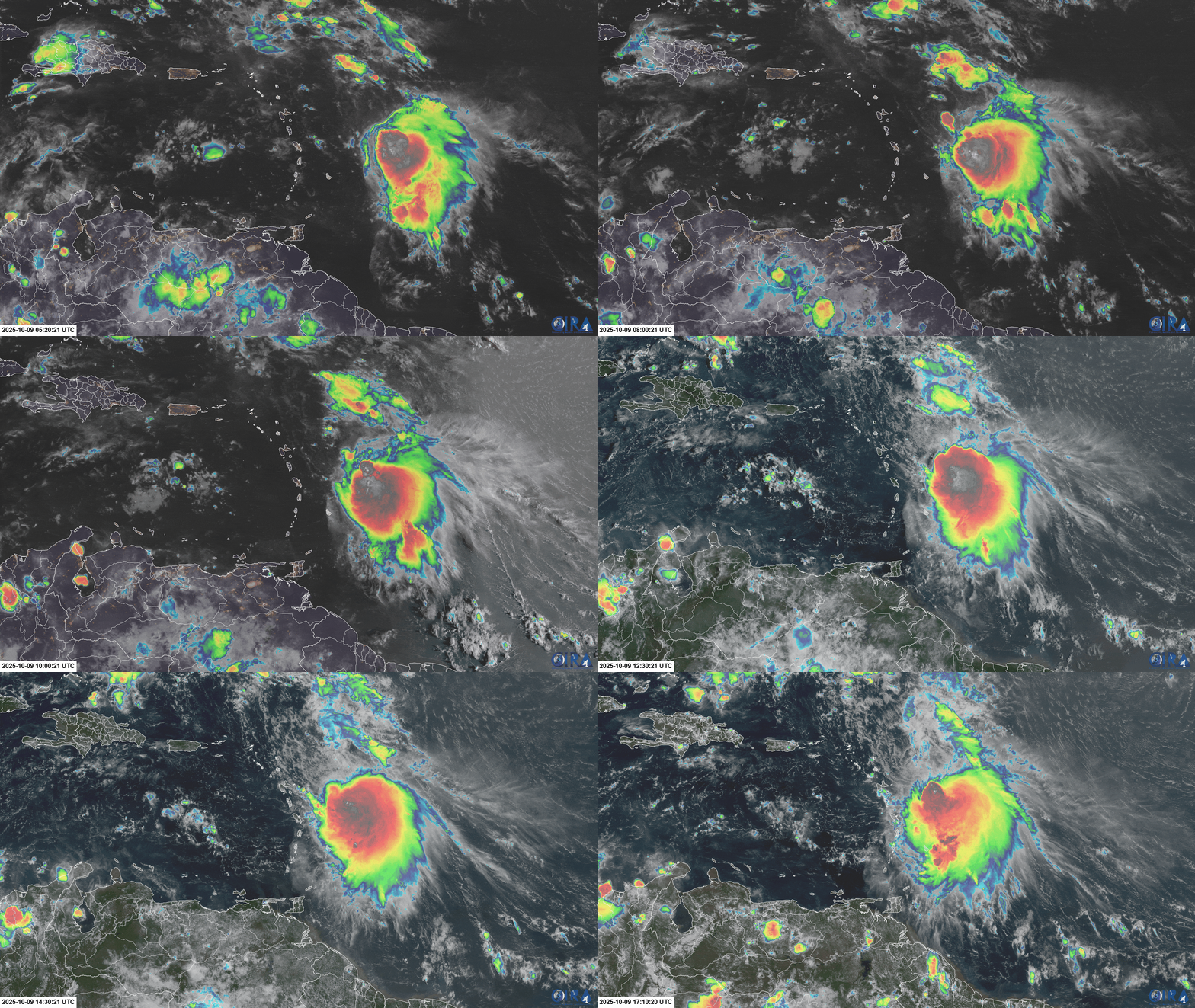
Forecast models indicate two peaks in swell periods – on Thursday and again from Friday morning through early Saturday. As a result of these longer-period swells bringing larger, battering waves to nearshore areas of eastern and, to a lesser extent, northern coastal areas, the Trinidad and Tobago Meteorological Service has issued a Hazardous Seas Alert for eastern and northeastern areas of both islands.
What you need to know
— What: Tropical Storm Jerry is producing swells that have periods between 10 and 15 seconds affecting T&T’s coastlines. In addition, Jerry’s influence on T&T’s atmosphere will lead to increased wind speeds from the south to southeast on Thursday night into Friday, creating larger-than-usual swells from the south.
— Where: Swells from Tropical Storm Jerry are forecast to primarily affect eastern and, to a lesser extent, northern coastlines of both islands through Friday night into Saturday. In addition, swells from the south Thursday night through Friday will create larger-than-usual waves along south-facing coastlines of the Gulf of Paria, and to a lesser extent, southern T&T.
— When: Agitated seas are primarily expected on Thursday through Friday.
— Impacts: Large open water waves may be hazardous to smaller marine vessels, making operations difficult with large waves. Larger waves along northern and eastern coastlines may lead to beach erosion. Strong winds and large waves may produce sea foam along easterly coastlines, particularly in Trinidad. Elevated threat of rip currents on northern and eastern coastlines.
— What Should You Do: All marine interests need to exercise extreme caution, while small craft operators should seek safe harbor. Inexperienced mariners should avoid navigating in hazardous conditions, especially those operating smaller vessels. Inexperienced swimmers should remain out of the water due to unsafe surf conditions. If you intend to go into the water, it is recommended that you use beaches with on-duty lifeguards. Secure objects on the beachfront that the wave action or winds may sweep away.
Latest Alerts

Localized Flood Alert Discontinued For Trinidad
Trinidad and Tobago is NOT under any tropical storm or hurricane threat, watch, or warning at this time.
The Hazardous Seas Alert
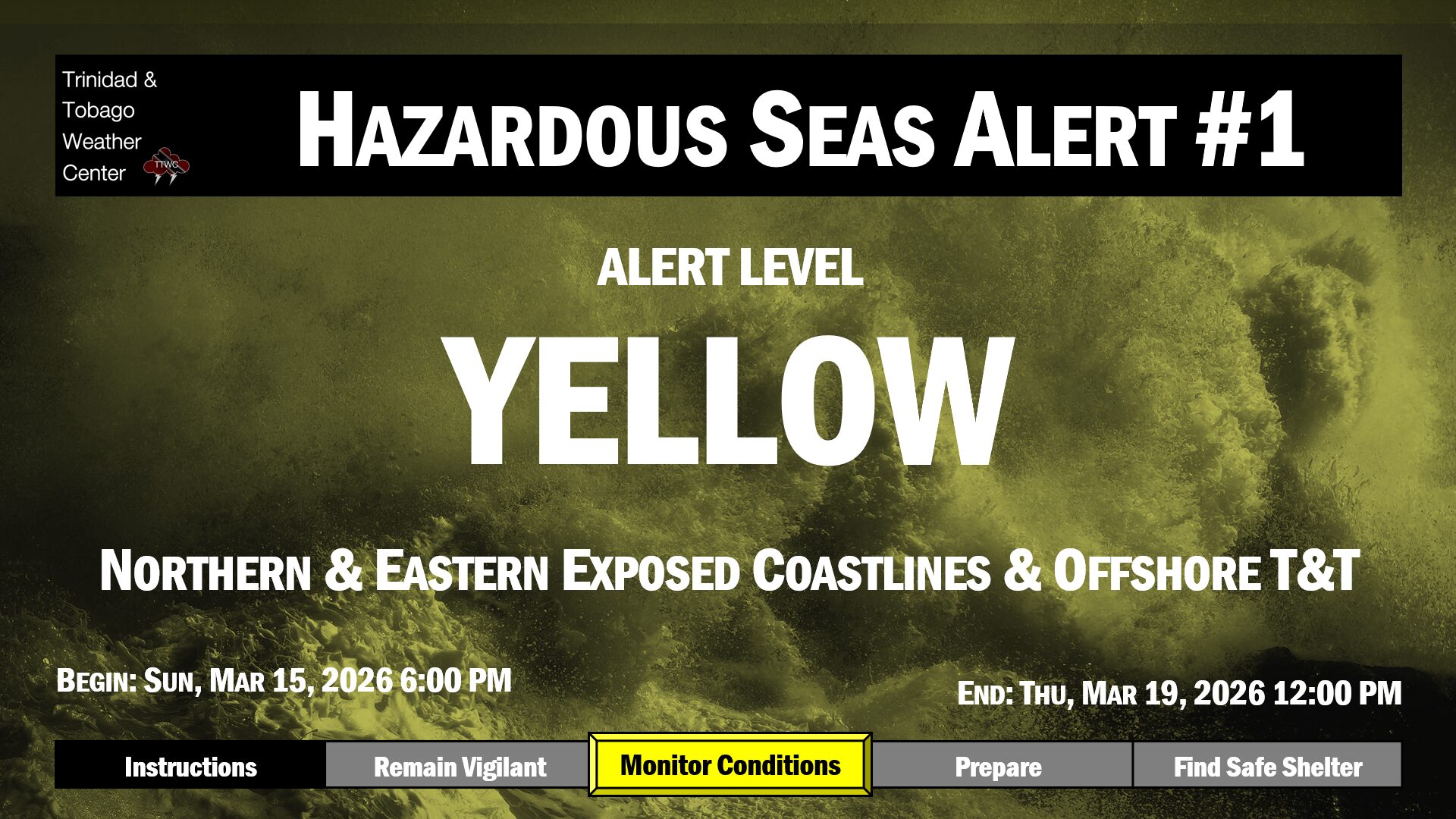
The Trinidad and Tobago Meteorological Service issued a Hazardous Seas Alert (Yellow Level) on Wednesday, October 8th, 2025, at 2:03 PM. The alert went into effect for eastern and extreme north-eastern coastlines of Trinidad and Tobago from 8:30 AM Thursday, October 9th, 2025, through 3:30 PM Thursday, October 9th, 2025.
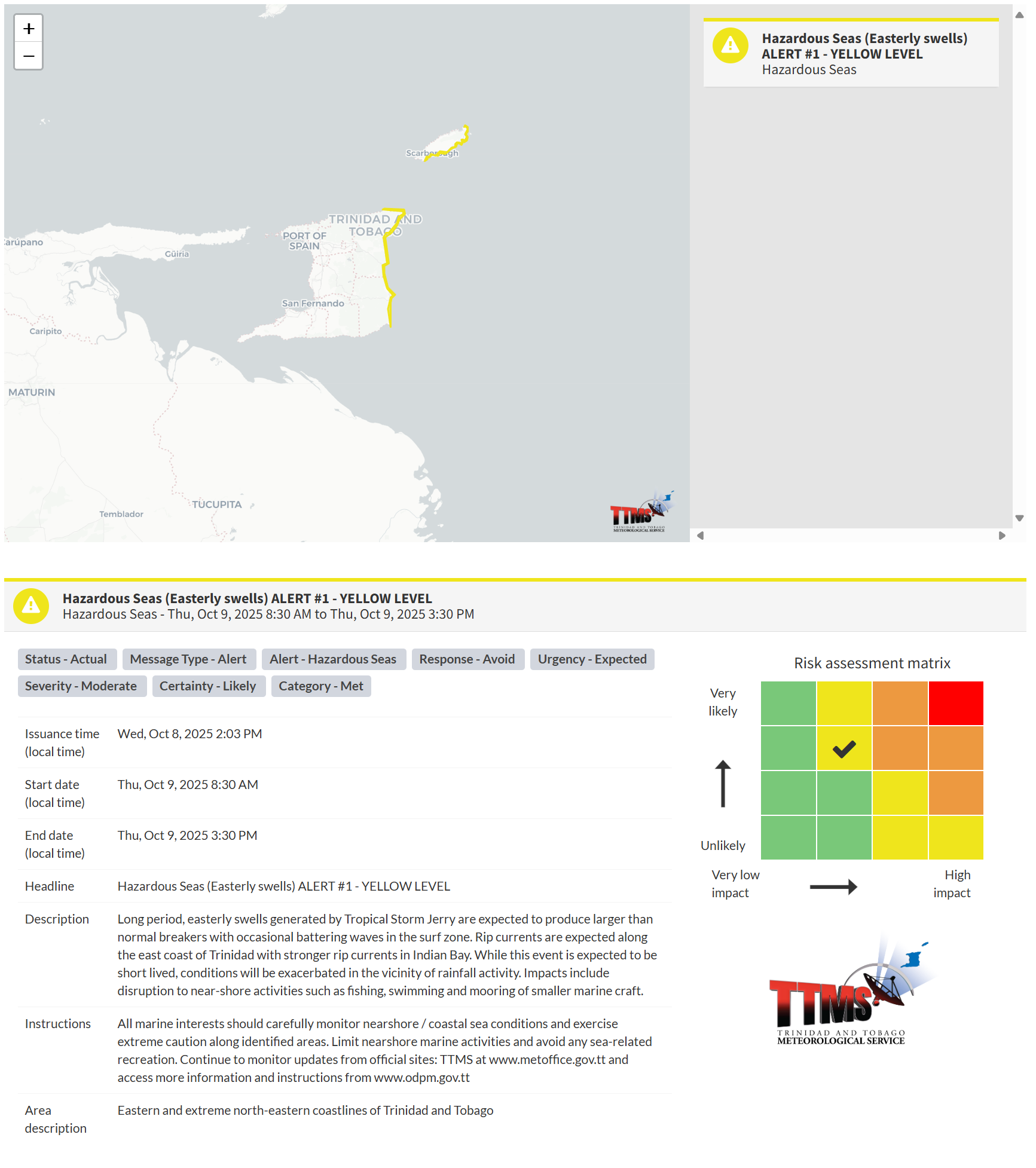
“Long period, easterly swells generated by Tropical Storm Jerry are expected to produce larger than normal breakers with occasional battering waves in the surf zone. Rip currents are expected along the east coast of Trinidad, with stronger rip currents in Indian Bay. While this event is expected to be short-lived, conditions will be exacerbated near rainfall activity. Impacts include disruption to near-shore activities such as fishing, swimming, and mooring of smaller marine craft,” according to the Trinidad and Tobago Meteorological Service.
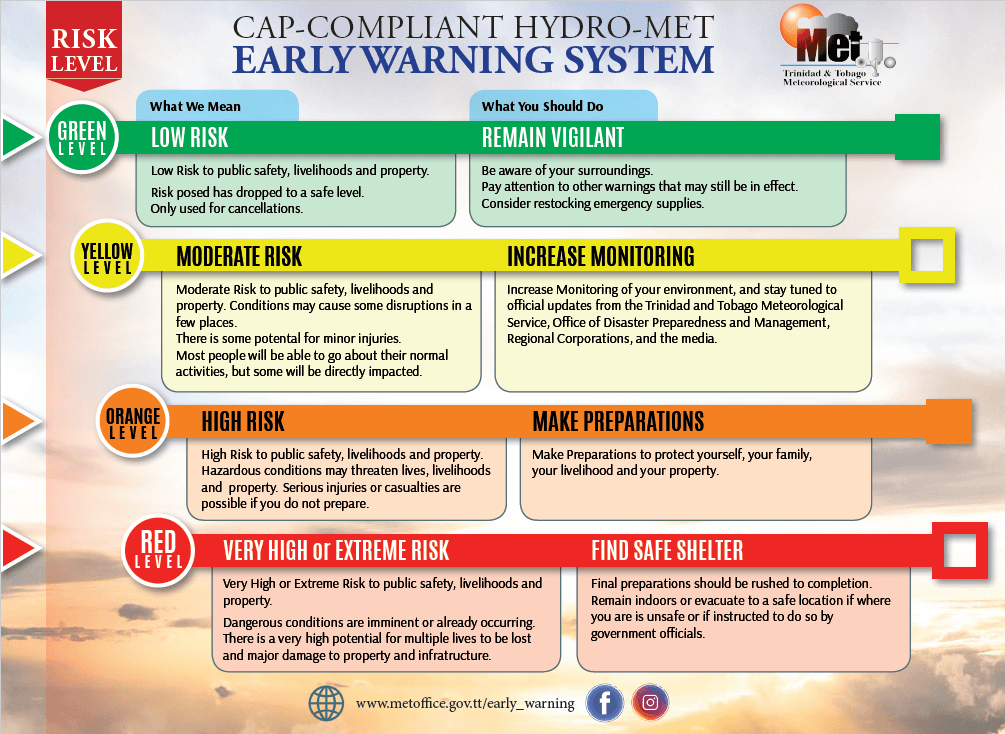
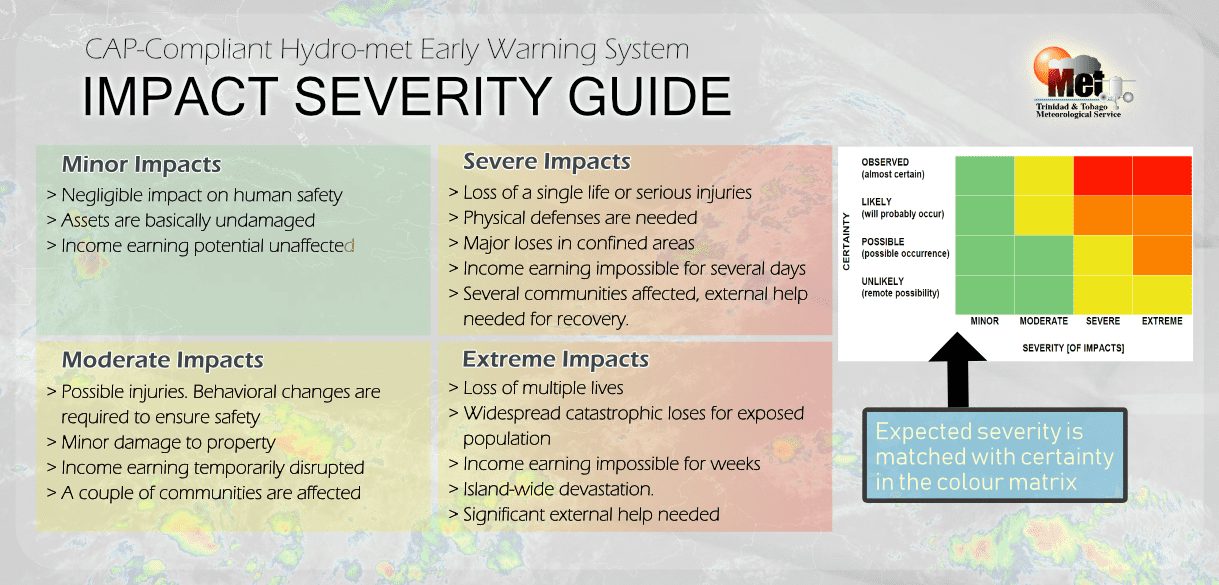
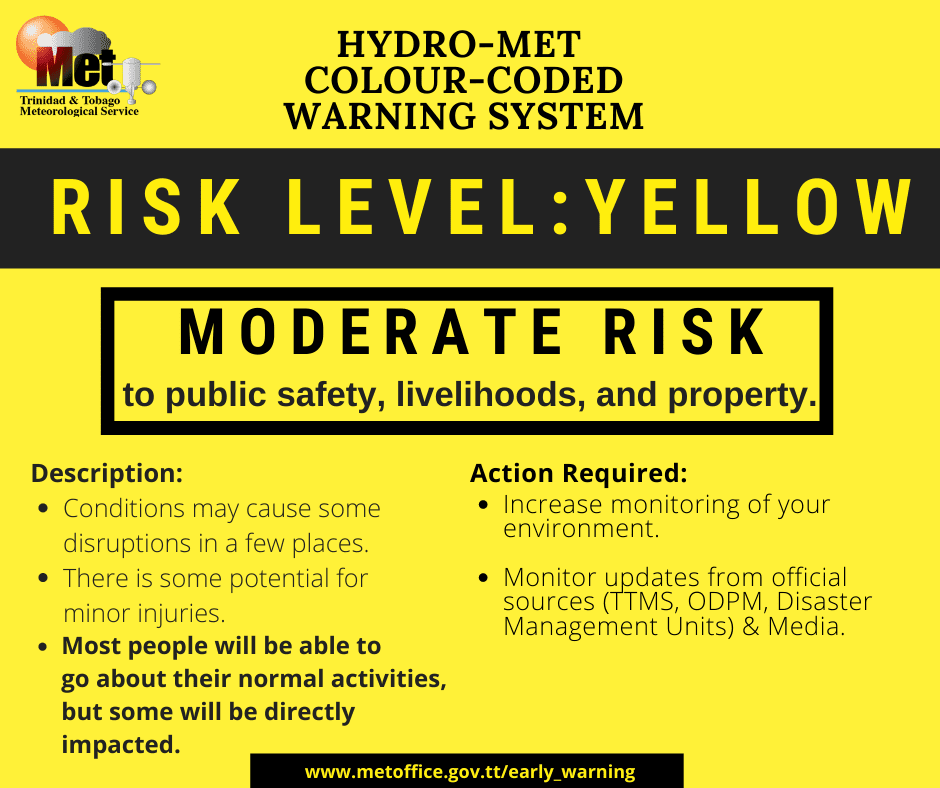
The alert’s color indicates the event’s severity and the likelihood of its occurrence. Currently, the alert level is Yellow. This means that the hazards are likely and that the impacts are moderate for this particular alert.
There is an increased risk of strong rip currents, which pose a serious hazard to swimmers and beachgoers. Rip currents can be life-threatening even for experienced swimmers. Agitated seas will likely be particularly dangerous for offshore activities, including fishing and other small craft marine interests.
For a moderate Hazardous Seas Alert, there is potential for injuries, requiring behavioral changes to ensure safety. There may be minor property damage, income-earning temporarily disrupted, and a couple of communities affected.
The Met Office advises that all marine interests should carefully monitor nearshore/coastal sea conditions and exercise extreme caution along identified areas. Limit nearshore marine activities and avoid any sea-related recreation.